Showing posts with label Harry Potter. Show all posts

Thursday, 10 March 2016

Why Horcruxes? (Harry Potter)

In a meta way, the introduction of horcruxes in the Harry Potter series is a means of explaining why Voldemort is the cockroach of evil wizards, the one who never seems to die completely.  Certainly, having horcruxes, with their own rules, artifacts, and infamy within the wizarding community, is a lot more articulate than “Because Magic,” and the task of finding/destroying them gives Harry and co. a real handy quest to go on in the final book.  But almost ever since we first heard about them, I’ve wondered what it is with Voldemort and horcruxes (spoilers.)

It can’t be denied – horcruxes are extremely powerful and useful, in a horrible way.  Through making a horcrux, a witch or wizard creates a safeguard against death.  This potent bit of dark magic allows them to tear off a piece of their soul and hide it somewhere, so that, if their body is destroyed, a part of them lives on and is able to come back.  However, this assurance comes at a high, terrible price:  the spell requires the caster to murder someone.  It’s in fact the very act of murder that causes the soul to tear in the first place, because the soul can’t go through something so reprehensible and remain intact.  This is why the wizarding world isn’t full of wizards who continually spring back up like weebles; the spell is such an atrocity that it seems many in the community won’t even speak of it.

But hey, what’s a little murder to Voldemort?  In The Half-Blood Prince, we learn that, as far back as his sixth year at Hogwarts, future genocidal dark lord Tom Riddle is found researching horcruxes, and already, his ambitions are set high – in a “purely academic” discussion with Professor Slughorn, he asks if there’s a limit to how many times the soul could be split, speculating that six would the ideal, most magically-strong number of horcruxes to create.  Slughorn tries to deny what’s happening in this conversation, but he’s horrified that Riddle would consider even a hypotheticalmagic situation that required him to kill six people.

That’s the thing, though.  Obviously, it’s obscene, just one of many red flags that Riddle is a dangerous psychopath, but why horcruxes specifically?  Even if Riddle doesn’t have particular qualms about killing, what makes a 16-year-old want a sevenfold magical insurance policy (six horcruxes, plus the part of his soul that remains in his body) against death?  I suppose we can posit that, already, he’s making his future plans to rise to absolute power and knows he’ll meet resistance.  Any aggressive power struggle is going to involve physical risk, and since his new world order involves wiping out Muggle-borns, he’ll be seen as an ethnic-cleansing monster.  Viewed this way, it’ll only be a matter of time before an army rises up to fight him or someone tries to assassinate him.  Is his obsession with horcruxes just sadistic forward-thinking?

That’s part of it, I’m sure – he knows he’ll be a target – but I think it goes deeper than that.  I think Voldemort is terrified of dying in any context, and I think he feels magic should allow him power over death.  As a child, when he first meets Dumbledore and learns about his mixed magical heritages, he immediately guesses that his absent father must have been a wizard and his deceased mother a Muggle.  “My mother can’t have been magic, or she wouldn’t have died,” he reasons.  Most people fear death, understandably, but Voldemort’s seems to go beyond that.  His first response to learning that he’s a wizard is to assume that it will automatically prevent him from dying, and when he realizes this isn’t true, he starts seeking a specific way to use magic to do just that, by any means necessary. 

Friday, 24 October 2014

Top Five Roles: Gary Oldman

Anyone who read my Capaldi Fall posts or who’s currently enjoying Buster Mondays has probably noticed that I like working my way through filmographies.  Though there aren’t many actors whose complete work (or even complete readily-accessible work) I’ve seen, there are plenty from whom I’ve seen a lot.  I got into Gary Oldman back in college (I rented DVDs from Blockbuster the store, not even online – the millennial Dark Ages,) and of all the projects I watched then and since, these are the ones I like best.  (Not necessarily the ones that I think objectively are the best, but the five that are the most up my alley.)

 
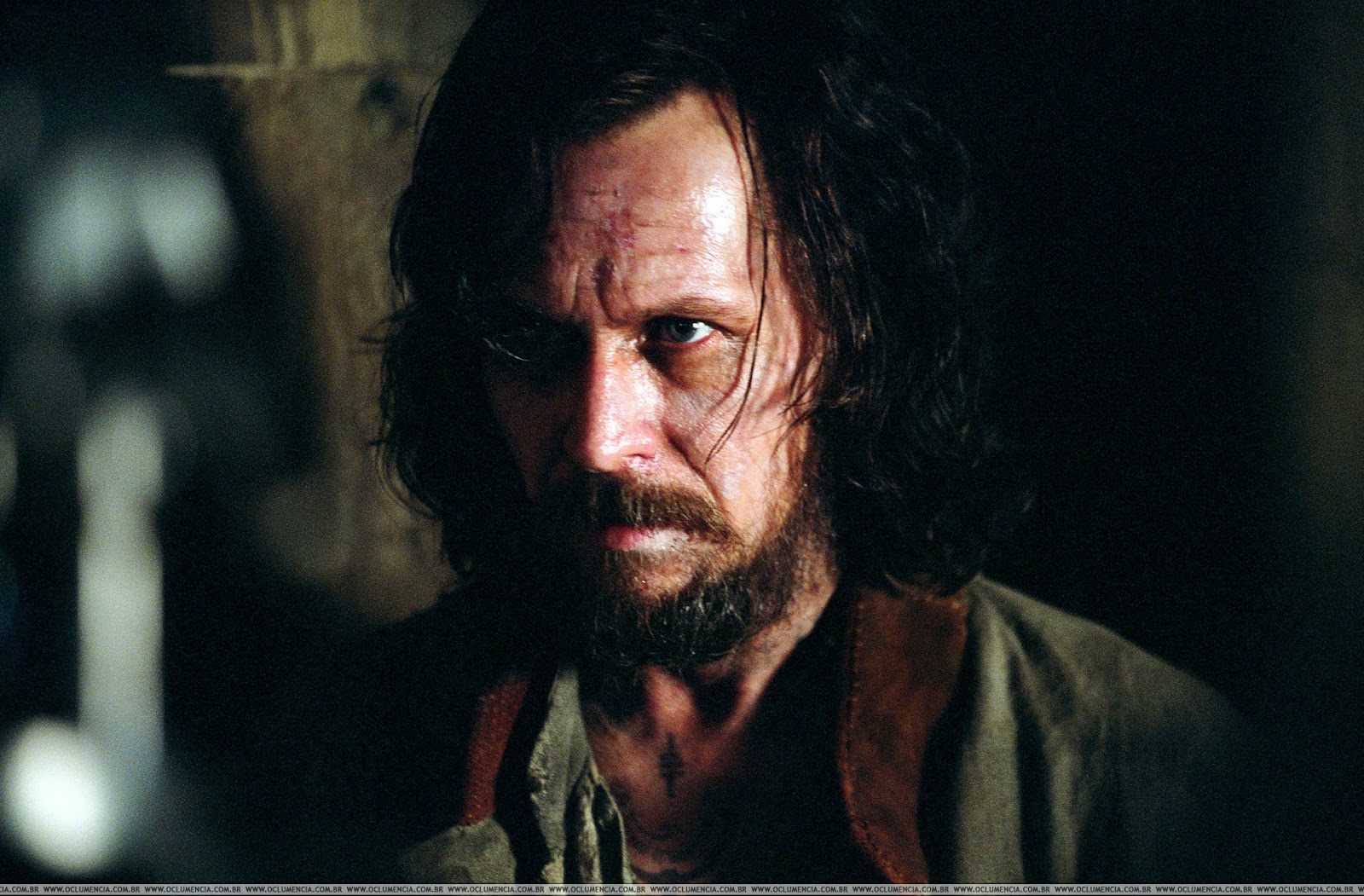
Sirius Black, Harry Potter
 
These are the films that first made me take notice of Oldman.  It’s true that he was far too old for the role (casting Alan Rickman as Snape necessitated aging up everyone in that generation) and his part often got the short shrift in the films, but he’s really excellent in them.  I love the haunted quality he has in The Prisoner of Azkaban, and Sirius’s connection with Harry throughout the series is just spot on.  
 
 
Rosencrantz, Rosencrantz & Guildenstern are Dead
 
…And here’s the film that made Oldman one of “my” actors.  I adore Rosencrantz so much.  I love that he’s played, not as dumb, but as artless and overwhelmed.  His almost childlike curiosity is endearing, and even though he often defers to Guildenstern as the thinker of the pair, he’s not content to be the yes-man all the time.  And the “dead in a box” speech?  Made.  Of.  WIN!
 
 
Emmett Foley, Chattahoochee
 
Some might call Chattahoochee a poor man’s One Flew Over the Cuckoo’s Nest, and it’s not an entirely unfair assessment, but Oldman is sublime in it.  Emmett, a Korean War vet with PTSD placed in a horrifically subpar mental institution, is an immensely rootable protagonist.  His pain is searing, his fight for dignity for himself and his fellow patients is admirable, and as his stay in Chattahoochee grows longer and longer, his perseverance is incredible.
 
 
Sid Vicious, Sid and Nancy
 
Sure, playing an anarchic, drug-addled rock star is a bit showboat-y.  Believe me, though, when I say Oldman earns every second of it.  It’s an exciting, very early role for him, and his fascinating performance as the Sex Pistols bassist is by turns kinetic, immature, brash, heartfelt, and gritty.
 
 
Jackie Flannery, State of Grace
 
Oldman is pitch perfect as a mercurial mobster in this mob/cop saga.  The younger brother of a Hell’s Kitchen gang leader, Jackie is the kind of supporting role that up-and-coming actors (like Oldman was at the time) kill for.  He’s tons of fun, but he also has some pretty dark edges and his moments of anguish are painfully genuine.  Terrific all the way through.

Tuesday, 14 October 2014

Favorite Characters: Ron Weasley (Harry Potter)

 
I’ve always had a tendency to gravitate toward supporting characters.  By narrative necessity, protagonists tend to get weighed down by extreme drama and hardship, and while that’s obviously a plus for storytelling, it can sometimes get a little heavy.  Supporting characters, then, are often allowed to be a bit more fun, since they don’t have as much plot to carry.  In good stories, they’re still given meaty material and opportunities to prove their mettle, but there’s more breathing space.  More variety, too – there isn’t as great a need to make them relatable to the Everyreader/viewer, so you get a wider assortment of traits and quirks.
 
There are oodles of interesting supporting characters in the Harry Potter series, many of whom I enjoy more than Harry, but Ron is a personal favorite.  With his average magical aptitude, academic performance, and athletic ability, he’s not the obvious Achiever that Harry and Hermione are.  In a way, he’s the Xander to Harry’s Buffy and Hermione’s Willow – to the untrained observer, he has nothing valuable to contribute and is perhaps, if anything, a liability in a serious fight (plus, he’s an eternal smart-aleck.)  Like Xander, though, he’s not one to be discounted.
 
Ron’s greatest quality is probably his loyalty.  From a young age, he falls in with Harry and remains at his side through all sorts of unspeakable danger.  In The Prisoner of Azkaban, he famously gives a more powerful, more notorious wizard the ole “if you want to kill Harry, you’ll have to go through us” routine despite his own serious injury.  Not that he’s Harry’s yes-man – they clash often enough, and both boys can be pretty stubborn when they think they’re right – and they do fall out on occasion.  Ron is especially susceptible to sulky overreactions once he becomes a teenager; Harry’s fame and seeming inherent specialness is the most common sticking point, since Ron is sensitive about his own perceived run-of-the-mill-ness.  When it really matters, though, Ron always has Harry’s back and puts his life on the line numerous times.
 
Aside from that, Ron has enough common sense to make up for his lack of book smarts (he’s been known to point out the important, obvious things that Harry and Hermione miss when they overcomplicate matters,) and as the only one of the trio to grow up in the wizarding world, his cultural knowledge often comes in handy.  When the situation is particularly grim, his wise-cracking brings some much-needed relief – there are probably entire months of Harry’s life in which he wouldn’t have smiled if not for Ron.  And for all that Ron can be oversensitive, obtuse (especially where romance is concerned,) and reckless, his default reaction is always to protect his friends.
 
Ron has a reputation for being something of a fraidy-cat – the movies really amplify this – but I don’t mind that he gets scared, because he still risks his life anyway.  I’ll leave you with the spider sequence from The Chamber of Secrets, to highlight how brave Ron is even when he’s afraid.  So, 12-year-old Ron enters the Forbidden Forest in the middle of the night, where he is confronted and pursued by dozens of supersized versions of his absolute greatest fear (that, by the way, want to eat him,) and all he has to defend himself is a malfunctioning wand.  In that state, he has wits enough about him to drive a severely-damaged car through an off-road, wooded area swarming with giant killer spiders.  In short?  Ron Weasley is a badass.

Friday, 12 September 2014

Relationship Spotlight: Harry Potter, Ron Weasley & Hermione Granger (Harry Potter)

 
It’s only fitting that this team is the first non-pair to break its way into the relationship spotlight.  Come on, who doesn’t love the trio?  Even when the books occasionally get bogged down by unfortunate plot developments and interminable boy-girl drama, the relationships between these three keep me coming back, and the movie producers won a jackpot with the onscreen chemistry between Daniel Radcliffe, Rupert Grint, and Emma Watson. 
 
They spark from their first moments together on the Hogwarts Express.  Their near-instant union may seem surprising, since they come to the school of witchcraft and wizardry from very different places.  Ron is from what you’d call a culturally-magical “Pure-Blood” family, immersed in the wizarding world from infancy, while Harry – with magical heritage but reared with no knowledge of it by his abusive Muggle relatives – and Muggle-Born Hermione are thrown into this underground world they’ve never seen before. 
 
And yet, when you think about it, there’s one tremendously important similarity between them on that first day:  they’re all desperate to prove themselves.  Harry has only just been introduced to the heroism of his murdered parents, as well as his own fame as the dark-wizard-vanquishing Boy Who Lived.  He’s the most recognizable figure in the society he’s just entered, and with everyone waiting to see if he’ll live up to his promise, he just wants to become a wizard his parents would have been proud of.  Ron, the second-youngest in a big family, has grown up in the shadow of his older brothers, all of whom are known at Hogwarts for their academic achievements, athletic skill, or popularity.  The family legacy weighs heavily on his somewhat insecure shoulders, and he feels immense pressure to pass muster.  And in addition to Hermione’s natural overachieving tendencies, she’s likely done enough preparatory research to at least have an idea that her kind aren’t universally welcome at Hogwarts.  With people like Malfoy looking down on her and spewing bile about “mudbloods,” this very smart girl is out to prove that her genetics don’t determine her magical abilities.
 
So they come together, each bringing different skills and qualities to the table.  From Harry’s relentless bravery to Hermione’s voluminous knowledge to Ron’s fierce loyalty, they work best as a unit, a fact proven every time there’s a temporary falling-out between any of them.  Together, they get more accomplished, defeat larger threats, and even have more fun than they do in pairs or individually (OT3 shippers, insert joke of your choice here.)  It’s a lesson that they unfortunately have to learn more than once, in part because they spend much of the series as temperamental teenagers who get in their own way, and in part because of Harry’s martyr-y tendency set forth alone to protect Ron and Hermione from his dangerous destiny.
 
But that never works for long, because for good or bad, Hermione and Ron have thrown their lots entirely in with Harry.  Despite whatever squabbles or disputes come along, there’s nothing they won’t do in support of him, and when the serious business goes down, they face death by his side with nary a thought.  For seven books and eight movies, they keep each other company, keep each other sane, and keep each other alive.  They’re one another’s sources of strength and hope, at times of aggravation and jealousy, but also of courage and comfort, and above all, of love.  Trio for.  The.  WIN!