Thursday, 30 October 2014

State of Grace (1990, R)

 
Talking about my favorite Gary Oldman roles last week reminded me how much I like this movie.  I’m not big into the mobster genre in general, but I like this one.  It’s a strong character story (it reminds me of Infernal Affairs in that way) with intriguing internal and external conflicts and some excellent acting.
 
The film opens on Terry Noonan, recently returned to Hell’s Kitchen after a twelve-year absence.  Some around the old neighborhood remain the same:  his best friend Jackie, up to his eyeballs in organized crime, approaches his shady activities with playful verve.  Others have changed:  the old power structure is gone, and Jackie’s older brother Frankie is now running the show.  Still others are alike and different at the same time:  Jackie’s sister Kathleen has moved uptown and is trying to put her old life behind her, but she’s just as drawn to Terry as she ever was.  And as for Terry, to what extent is he the same or different?
 
You’ll notice my synopsis dwells on the characters, and that’s where the movie best excels.  It explores a number different personalities forged in the crucible of the Kitchen and examines how the crime that surrounds them all affects them and the relationships between them.  Frankie, attempting to forge an alliance between his own Irish boys and the Italians down the street, is determined to prove his gang the equal of the richer, more established family.  Jackie is equal parts recklessness, jocundity, hair-trigger temper, and affection, and he doesn’t know how to reconcile that his brother is now his boss.  Kathleen pulls away from her family while simultaneously worrying for their safety and well-being.  And Terry, in the middle of it all, is pulled by old and new desires, old and new loyalties.
 
I like that the main mobsters we see here are Irish.  It’s a bit less typical, messier and grittier than the usual mob stereotypes that juxtapose violence and luxury.  Someone like Jackie thinks his illegal extracurriculars are doing right by his neighbors; by torching a gentrified building, for instance, he’s keeping the yuppie scum from moving in and taking over.  The Irish-Italian interaction is interesting, too.  Loyalty and enmity runs deep here on both sides – strangers are trusted or threatened depending on their last name, and to the Irish boys, “pizza” and “spaghetti” are dirty words.
 
I singled out Gary Oldman in my earlier post, and I’ll single him out again here.  His Jackie is a can’t-take-your-eyes-off-him character, explosive, engaging, and surprisingly sensitive.  However, the acting is great all around, and several fine actors – all of whom look stunningly young here – deserve kudos for how well they handle the complexities of these characters.  Sean Penn plays Terry’s internal tug-of-war to perfection, and as Kathleen, Robin Wright (Princess Buttercup!) likewise brings pathos to her conflict between worlds.  Ed Harris (I’ll always think of him as Christophe from The Truman Show) is alternately hot and cold as Frankie, and both sides are terrific. 
 
Warnings
 
Lots of violence (including gun fights and death,) swearing, sexual content (including sex scenes and partial nudity,) drinking, and smoking.

Wednesday, 29 October 2014

Top Five Songs: RENT

I’ll always remember how much this score excited me the first time I heard it.  To me, it was so new, so original, so special.  Even now that I’ve greatly expanded my musical theatre education, it’s still an important score for me.  Of the many vibrant songs in the show, these five are my favorites.

(Pictures are either from the original Broadway production or the movie - whatever I could find for each song.)


“One Song Glory” – This was the first song I heard from RENT, the one that made me rush out to get the cast recording.  It’s Roger’s “I want” song, but given the subject matter – his desire to write one great song before he dies of AIDS – it’s far more melancholy and desperate than such songs usually are.  The rock melody is gorgeous, and I love the emphasis it places on the power of music.

Best line:  “Find, the one song / Before the virus takes hold, glory / Like a sunset. / One song / To redeem this empty life.”


“Another Day” – The back-and-forth in this song between Roger and Mimi is fantastic – her pursuit, his retreat, his despondency, her hope.  I like that the two halves of the song are so different musically, but they layer well on top of each other, and it’s cool that Mimi repeats the same chorus introduced in “Life Support.”  More than just a recurring motif, it demonstrates her familiarity with Life Support and shows how much further she’s come in dealing with her illness.

Best line:  “There’s only now. / There’s only here. / Give in to love / Or live in fear.”


“La Vie Boheme” – You have to love this boisterous anthem to our Boho heroes and their East Village life.  It’s so full of life, passion, and defiance, and while it’s a great showcase for Mark, everyone gets a chance to shine.  Plus, who can memorize all the lyrics and not feel a sense of accomplishment?

Best line:  “To being an us for once instead of a them! / La vie Boheme!”


“I’ll Cover You (Reprise)” – After listening to this song as a light, lovely duet in Act I, it’s heart-wrenching to hear it retooled as a mournful solo in Act II.  You can practically hear Collins tearing apart as he sings, and the choral backing that rises behind him is just beautiful.

Best line:  “If you’re cold and you’re lonely, / You’ve got one nickel only, / When you’re worn out and tired, / When your heart has expired, / Oh lover, I’ll cover you.”
  

“Goodbye Love” – Another sad song.  This remains one of the best book numbers I’ve ever heard.  The group’s falling out is so raw and real, Mark and Roger’s fight feels absolutely visceral, and the final moments between Roger and Mimi are a gut punch.  Amazing scene.
 
Best (two) line(s):  “You’re always preaching not to be numb / When that’s how you thrive. / You pretend to create and observe / When you really detach from feeling alive.”
“Perhaps it’s because I’m the one of us to survive.”

Tuesday, 28 October 2014

Favorite Characters: Ichabod Crane (Sleepy Hollow)

 
Last time it was Abbie, and today it’s a closer look at the other member of Team Witness.  All the way from 1781, it’s Ichabod Crane!
 
As with Abbie, I liked Crane pretty much immediately in the show’s pilot.  After the 18th century prologue, Crane awakes in the present day and, as he’s interrogated by the police, adopts an instantly self-assured attitude.  He demands to speak with the local magistrate, comments on Abbie’s apparent “emancipation,” and speaks confidently about his encounter with the horseman.  There’s no “You wouldn’t believe me!” hemming and hawing, no “I know it sounds crazy!” apologies – he merely reports the facts as he knows them and turns up his nose at the officers who question his sanity.
 
A layered, thoughtful characterization follows this first impression.  I really like that, while Crane is cast in more of the “believer” role to Abbie’s “cynic,” he’s not painted as some ignorant fellow from the past who unquestioningly accepts all manner of superstitions.  On the contrary, Crane is highly educated and knowledgeable.  He acknowledges that this world of demons, witches, and magic is just as incredible to him as it is to Abbie, but he’s accepted the truth of it because of his personal experiences.  Now, he devotes his education and intelligence to researching the supernatural and displays courage and cunning in fighting the good fight.  (He also makes it clear that ideas like racial equality or sexual diversity didn’t spring to life fully formed out of the modern age.  Not that it doesn’t surprise him to see Abbie working as a police officer, for example, but he’s no old-timey backwater bigot.)
 
Of course, being from the 1700s means Crane also provides us with plenty of fish-out-of-water humor.  He takes to some aspects of the 21st century, like trash-talking umpires at baseball games and driving, with gusto, while the appeal of other things, like yoga and skinny jeans, eludes him.  He’s forever perplexed by what Abbie and her contemporaries do or don’t know about prominent figures from his era – he criticizes the label on a Sam Adams bottle because the aristocratic Adams would’ve never been so coarse as to roll up his sleeves, and it rankles him that a blowhard like Benjamin Franklin is so well-regarded.  Sometimes, however, Abbie’s 18th-century knowledge goes beyond his; there’s a great montage of his outraged reactions to hearing her “slander” about Thomas Jefferson and Sally Hemmings.  And aside from his general exposure to modern life, I love the 18th-century mindset with which he approaches it.  His voicemail is composed as a formal missive complete with a salutation, and I never get tired of his shock and disgust at our levels of taxation.  Why haven’t the people taken to the streets, indeed.
 
All of this is funny, obviously, but I also like what it tells us about Crane himself.  He’s a self-assured man who’s used to knowing everything (the eidetic memory doesn’t hurt,) and it frustrates him to feel behind the times.  He still hasn’t gotten the hang of the Internet and handles Abbie’s computer a bit like it’s a bomb, and Abbie sometimes teases him when he refuses to admit he doesn’t know what she’s talking about.  At the same time, though, he puts a lot of effort into learning about the customs and conventions of his new home.  Despite the overwhelming amount of new information, technology, and popular entertainment out there, he dutifully chips away at it whenever he’s not being attacked by monsters from assorted circles of hell.  A tall order, but he’s up to the challenge.

Monday, 27 October 2014

Spite Marriage (1929)

 
Though a lot rougher than The Cameraman, Buster Keaton’s other silent feature with MGM isn’t bad.  It suffers from the slide into making Buster’s characters bumbling sad-sacks, and the behind-the-scenes quarreling comes through onscreen, but it has several topnotch sequences that are pure Buster and is an ultimately enjoyable film.  I wouldn’t go so far as to call it a last hurrah before Free and Easy and its ilk (shudder!), but I’d rank it on par with Collegeor The Saphead.
 
The plot veers into over-convoluted, especially in the second half, but at its core is Buster’s character Elmer and his starstruck love for the actress Trilby Drew.  Elmer is a man of modest means, a trouser-presser who “borrows” his wealthy clients’ clothes when he goes to the theatre to watch Trilby perform – every night – so she’ll think he’s a millionaire.  (Side note:  he’s sucha stalker.  It’s Buster, so he’s sweet and funny about it, but he’s totally a stalker.)
 
Elmer thinks he’s hit pay dirt when Trilby decides to elope with her adoring, supposedly-wealthy fan, but in truth, she’s only doing it to get a rise out of her costar, who unforgivably got engaged to someone else.  So, Elmer finds himself with a miserable wife who’s in love with another man and doesn’t care a whit about him.  Luckily, this is before MGM set out to cinematically break Buster Keaton, so the movie is ultimately about Trilby realizing how much more there is to Elmer than she thought.  In a meandering development that for some reason involves bootleggers on a boat, Elmer is able to step up and prove his capabilities.
 
Made between The Cameraman and Free and Easy, this film continues the MGM trend of making Buster’s characters more pitiable.  Though he acquits himself well in the third act, a good-sized chunk of the movie thrives on the whole “poor Elmer” angle.  He embarrasses himself in front of Trilby, other people embarrass him in front of her, and after their marriage, she embarrasses him in front of others.  Her dismissive treatment of him prompts a lot of hangdog expressions that, as I’ve said before, feel out of place in a Buster Keaton film.
 
However, there are some tremendous laugh in this movie.  There’s an amazing sequence of Elmer trying to get Trilby into bed after she’s passed out drunk, and it’s so funny you could seriously pull a muscle laughing at him.  Terrific physical comedy, and Buster’s acting is priceless.  (Fun fact – it’s easily the movie’s best and most memorable scene, and MGM didn’t want it in the film.  Oy vey.)  A long sequence of Elmer getting caught up in some backstage (and onstage!) shenanigans at Trilby’s play, as filmed, dips at times into cringe humor – that poor Elmer thing again – but it also has some great, funny bits.  I doubt that anyone could badly apply a false beard with more panache than Buster, and it’s super.
 
As for other entries in the plus column, Dorothy Sebastian does a wonderful job as Trilby.  Her evolving relationship with Elmer feels believable and is very engaging to watch.  Some of the action is fantastic, and although the plot takes some nonsensical turns to get there, you really can’t go wrong with Buster on a boat.
 
Warnings
 
Slapstick violence, some light gun violence, and quite a bit of drinking.

Sunday, 26 October 2014

Doctor Who: Series 8, Episode 10 – “In the Forest of the Night” (2014)

 
The prevailing thought that comes to mind with this episode, sadly, is “half-baked.”  It has an intriguing premise and great visuals, but it feels like the story didn’t get more than one or two drafts.  With handwavy fairytale logic, inconsistent characterizations, and a half-hearted resolution, the episode doesn’t really work for me.
 
Clara and Danny have just woken up after a museum sleepover trip with a gaggle of kids (all of whom seem way younger than the students we’ve seen Clara with so far – what’s the grade range at Coal Hill?) to discover a forest has grown overnight through the streets of London.  It doesn’t take long to discover the insta-forest is a global event; any and all roads are now littered with trees, and they seem impervious to attempts to clear them.  One troubled girl runs away from the group and finds the TARDIS, and the Doctor realizes she may be the key to learning the truth about the strange phenomenon.
 
I really like the idea of the forest – it gives new meaning to the phrase “urban jungle” – and the imagery of underground station signs and Trafalgar Square lions standing incongruously amongst the trees is really cool.  (Granted, a real forest springing up in a city center would look less like forest and more like trees growing between buildings.  It wouldn’t have the nature-y feel of this episode, but I appreciate that it was easier to film in a forest and add hints of a city than vice versa, and either way, the effect is neat.)  Also, the Doctor is fairly good here.  He can’t be bothered with all the little moppets traipsing after Clara and Danny, but he attacks the problem with relish and has some nice interactions with Maeve, the central little girl.
 
Unfortunately, that’s pretty much where the high points end.  It doesn’t make sense that it’s just the Doctor, Clara, Danny, these kids, and a handful of government workers in the woods.  Where’s everybody else?  There’s no one in the streets freaking out, no hippies trying to commune with the new forest, no tone-deaf workaholics screaming about having to get to the office.  Aside from Maeve, the kids are mostly annoying and don’t behave or react in ways that seem even remotely fitting for the situation.  As for the fear factor, there’s a bit of manufactured danger, but overall, I don’t get much fear or urgency from anyone – there’s no sense of menace. 
 
Clara seems really out of character for much of the episode.  Granted, the glimpses we see of her in the classroom show her to be kind of a terrible teacher (why?) but she’s always been a fairly caring person, especially where kids are concerned.  Here, though, she’s all about the mystery, and Danny literally has to keep reminding her that they’re responsible for ensuring the kids’ safety.  It’s just really off, and since her trips with the Doctor often feel like an afterthought to her “real” life this season, it’s even more inconsistent.  Worst of all, everyone’s actions go haywire in the last third of the episode, and I can’t make sense of any of it.  Seriously – I don’t even know what to make of anything the Doctor and Clara say or do.
 
Lastly, if the show isn’t going to do anything with the Coal Hill/One connection, I wish Clara would teach somewhere else.  I remember how excited and interested I was when we first saw her there in the 50thanniversary special, but the show treats it like any old school.  It feels to me like the show is just trading on our memories of Coal Hill to make the various school plots more special to us, and I don’t appreciate that.

Saturday, 25 October 2014

Blackadder (1983, 1986-1989, 1999)

 
I didn’t take to Blackadder until my second try.  The first series of this historical Britcom is far and away its weakest; I made it through maybe two episodes before giving it up as not worth my time.  It wasn’t until I got into Fry & Laurie in a big way that I saw anything from later series, and that made all the difference.
 
This inventive comedy takes the same basic character templates – unscrupulous Blackadder, dull-headed Baldrick, exuberant George, etc. – and places them in different periods of English history over the course of the show.  So, we get Middle Ages Blackadder, Elizabethan Blackadder, Regency Blackadder, and World War I Blackadder, with a few detours to other eras for specials.  There’s a little reshuffling, but the cast largely remains the same across the seasons. 
 
Like I said, series 1 is mostly forgettable.  The show was still finding its footing, and it hadn’t yet hit on Blackadder’s foxlike conniving and imperious attitude.  Rather, he’s just a hapless dope like fellow characters Baldrick and Percy, and it all feels really unspecific.  Series 2 through 4, however, are definitely Blackadder, offering up some fun historical satire, hilarious dialogue, and terrific acting.
 
The assorted historical backdrops are what set Blackadderapart from many comedies.  The show mines its different eras for humorous potential, taking advantage of fads, fashions, and conventions of the day for each series.  Over the ages, it skewers topics as varied as medicinal leeches, the French Revolution, and flyboys.  Even the first series is at its most successful in this aspect – there’s a witch hunt that’s an absolute scream. 
 
And then, there’s the cracking dialogue.  The series thrives on insult comedy, and it’s always a pleasure to listen to the intricate diatribes the sharp-tongued Blackadder lets loose on his dimwitted friends.  Lest I spend four posts worth cataloguing favorite lines, I’ll limit myself to one:  “You wouldn’t see a subtle plan if it painted itself purple and danced naked on top of a harpsichord, singing ‘Subtle plans are here again.’”
 
In addition to the always-great Stephen Fry and Hugh Laurie, other regulars include Rowan Atkinson as Blackadder (hard to believe he’s the same guy who does Mr. Bean,) Tony Robinson, and Tim McInnerny.  Also, Miranda Richardson is a delight as Queen Elizabeth in series 2, and she makes guest appearances in later seasons as well.
 
If I had to pick a favorite era of the show, I’d go with series 4’s World War I setting.  I’m not sure that it’s necessarily the strongest overall, but the gallows humor is excellent and the satire is particularly biting (not to mention, it’s the only series in which both Fry and Laurie are featured prominently throughout the whole thing.)  And after all the fantastic comedy of the first five episodes, the finale has a lot of genuine heart and emotion.  Just all-around great television.
 
Warnings
 
Swearing, sexual language and references, smoking, drinking, some exaggerated violence, and gross-out humor.

Friday, 24 October 2014

Top Five Roles: Gary Oldman

Anyone who read my Capaldi Fall posts or who’s currently enjoying Buster Mondays has probably noticed that I like working my way through filmographies.  Though there aren’t many actors whose complete work (or even complete readily-accessible work) I’ve seen, there are plenty from whom I’ve seen a lot.  I got into Gary Oldman back in college (I rented DVDs from Blockbuster the store, not even online – the millennial Dark Ages,) and of all the projects I watched then and since, these are the ones I like best.  (Not necessarily the ones that I think objectively are the best, but the five that are the most up my alley.)

 
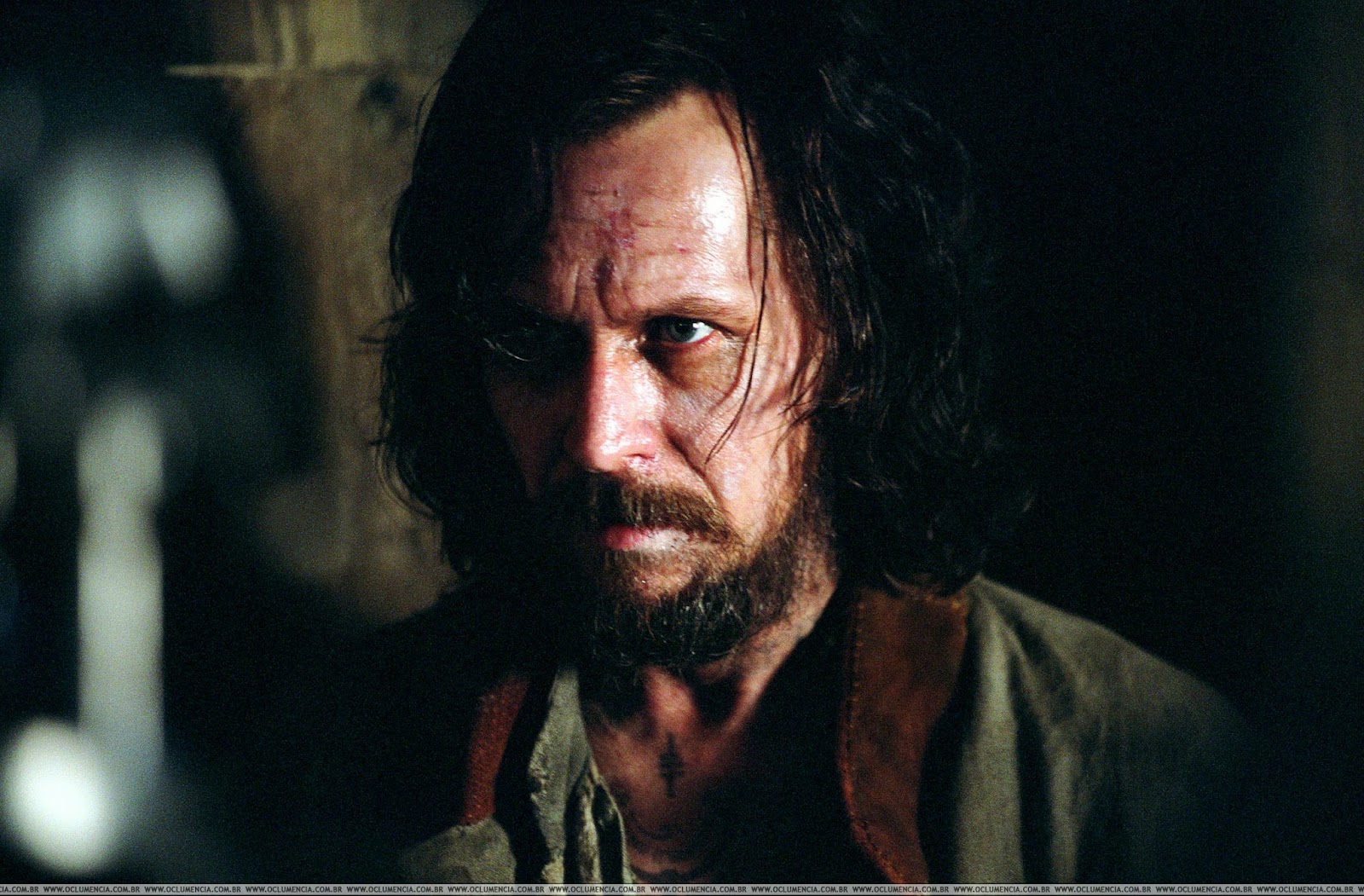
Sirius Black, Harry Potter
 
These are the films that first made me take notice of Oldman.  It’s true that he was far too old for the role (casting Alan Rickman as Snape necessitated aging up everyone in that generation) and his part often got the short shrift in the films, but he’s really excellent in them.  I love the haunted quality he has in The Prisoner of Azkaban, and Sirius’s connection with Harry throughout the series is just spot on.  
 
 
Rosencrantz, Rosencrantz & Guildenstern are Dead
 
…And here’s the film that made Oldman one of “my” actors.  I adore Rosencrantz so much.  I love that he’s played, not as dumb, but as artless and overwhelmed.  His almost childlike curiosity is endearing, and even though he often defers to Guildenstern as the thinker of the pair, he’s not content to be the yes-man all the time.  And the “dead in a box” speech?  Made.  Of.  WIN!
 
 
Emmett Foley, Chattahoochee
 
Some might call Chattahoochee a poor man’s One Flew Over the Cuckoo’s Nest, and it’s not an entirely unfair assessment, but Oldman is sublime in it.  Emmett, a Korean War vet with PTSD placed in a horrifically subpar mental institution, is an immensely rootable protagonist.  His pain is searing, his fight for dignity for himself and his fellow patients is admirable, and as his stay in Chattahoochee grows longer and longer, his perseverance is incredible.
 
 
Sid Vicious, Sid and Nancy
 
Sure, playing an anarchic, drug-addled rock star is a bit showboat-y.  Believe me, though, when I say Oldman earns every second of it.  It’s an exciting, very early role for him, and his fascinating performance as the Sex Pistols bassist is by turns kinetic, immature, brash, heartfelt, and gritty.
 
 
Jackie Flannery, State of Grace
 
Oldman is pitch perfect as a mercurial mobster in this mob/cop saga.  The younger brother of a Hell’s Kitchen gang leader, Jackie is the kind of supporting role that up-and-coming actors (like Oldman was at the time) kill for.  He’s tons of fun, but he also has some pretty dark edges and his moments of anguish are painfully genuine.  Terrific all the way through.